

Imagine this scenario: you’re conducting an important business conversation, one that could lead to signing a contract worth thousands of zlotys. Or perhaps you’re recruiting an exceptional individual who could transform your business?
You speak, explain, argue… but you feel the other person isn’t convinced. Maybe the problem isn’t WHAT you’re saying, but HOW you’re saying it?
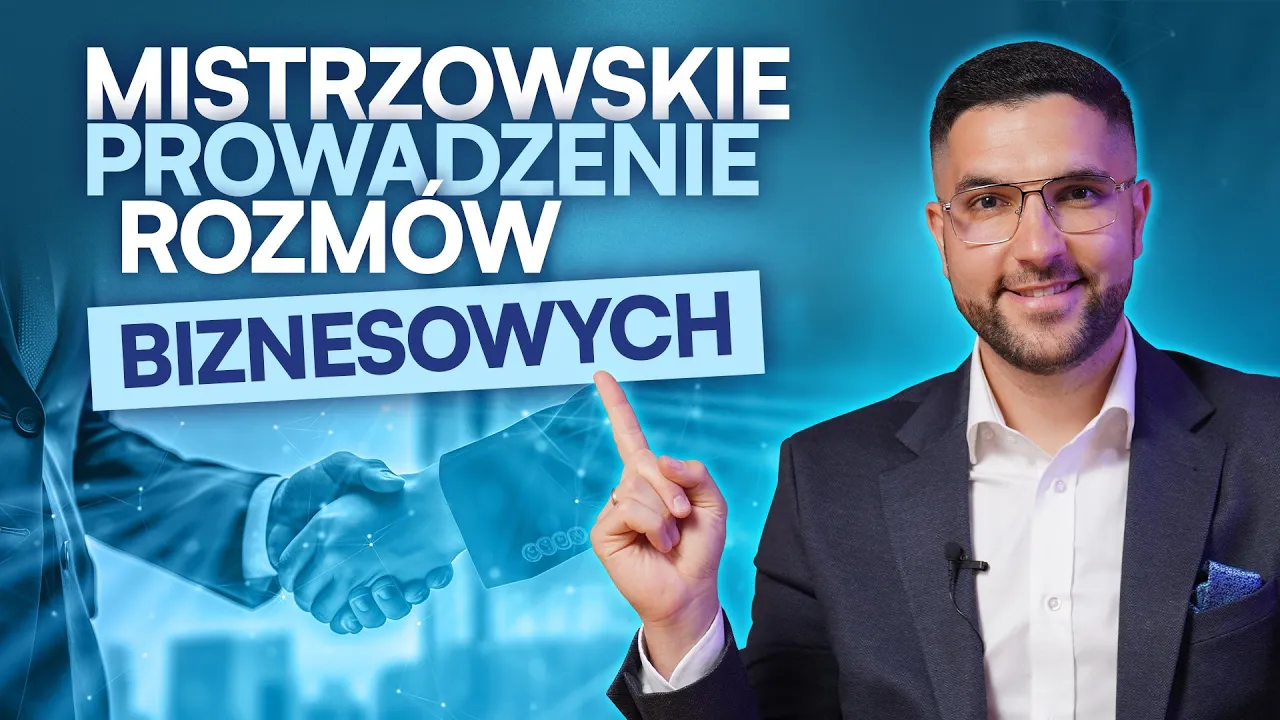
Today, I’ll share knowledge with you that completely changed the quality of my business conversations. Discover three communication modes that enable masterful business conversations!
Key Lesson: There’s No Universal Conversation Style
Effective communication requires flexibility and the ability to switch between three fundamental modes:
- Declarative Mode – A style where you convey a specific expectation or suggestion calmly, clearly, and—crucially—based on benefits. This works well when you want to clearly express expectations and benefits.
- Interrogative Mode – This engages the other person’s thinking and allows them to participate. Instead of imposing solutions, you let the interlocutor arrive at them independently.
- Imperative Mode – When used appropriately—with a soft, engaging intention—it can be motivating.
When used at the right moment, they can transform an ordinary conversation into a truly strategic exchange that yields tangible results.
The Art of Asking Questions
It is often the skillful asking of questions that determines the success of an entire recruitment conversation. Using the right series of questions can prompt the interlocutor to change their perspective, without actually persuading them!
Your questions must:
- Highlight current limitations
- Elicit emotions from professional experiences
- Show real pain – and the solution
This is the power of questions in building recruitment. You don’t persuade – you allow someone to persuade themselves.
Preparing for the Conversation
Before the meeting, define:
- Main Goal – What exactly do you want to achieve?
- Additional Goals – What would be a “plus” if the main goal isn’t achieved?
This helps maintain composure and control over the conversation, as well as satisfaction upon its completion.
A good conversation isn’t just about presentation. It’s about flexibility and being prepared for various responses from the other party:
- Response: YES Goal achieved. You move on to the next steps – order, registration, action plan.
- Response: I DON’T KNOW This isn’t a failure, but a moment to ask the right questions to understand their doubts: “What else do you need to feel 100% convinced about this decision?”
If an obstacle arises – you show the solution.
- Response: NO Here, I use my proven 3-chances method:
- I don’t accept “no” as final.
- I say the exact same thing, but in different words.
It often turns out that someone misunderstood the offer. When you clarify, it becomes clear that the conversation wasn’t lost after all.
Learn More
In the full video material, I explain:
- Why is the interrogative mode the most powerful tool in a leader’s arsenal?
- How to conduct a recruitment conversation to effectively prompt the interlocutor to change their perspective?
- What specific question opens doors and why?
- What is the 3-chances method for a negative response?
…And much more!
Mastering business conversations isn’t about perfecting one communication style, but about skillfully switching between different modes depending on the situation and the person you’re speaking with. Practice these techniques, test them in real-world scenarios, and observe how they transform your business conversations from awkward monologues into effective, strategic exchanges that yield real results.